

Sometimes both institutions and people pick up a firearm and blow both feet off.
Cambridge University has done so with its gross mismanagement of the Jason Arday affair.
Oceans of ink have been spilt already on this issue, so I’m not going to relitigate the main background. Instead, I want to make four observations, in no particular order.
Oh, the humanities (and social sciences)
The problems across these two large disciplinary areas long predate the idiotic wokery that got Jason Arday appointed to a professorial chair at Britain’s second oldest, second most famous university. Yes, wokery has made them worse, chiefly because the theoretical frameworks animating it—which Lorenzo Warby has written about both here and at his own place—deny the possibility of truth outside that of personal experience. This means people don’t just get their own opinions, they also get their own facts.
However, before wokery came along, the fact that the wordcel disciplines—with the partial exception of economics—were underpowered was known in detail to most Australian lawyers.
This is thanks to how Australian legal education is structured (and has been structured for many decades). Note: law is not part of the humanities, social sciences, or anything else. It is its own thing, and uses an intellectual method not widely employed elsewhere: analogical reasoning. This is sometimes criticised as “casuistry.”
Australian legal training (the “LLB”) represents an uneasy compromise between American generality and British specificity, in that it is made very, very difficult simply to enrol in a law degree without also enrolling in (usually) an arts degree at the same time. Unlike the UK or US, it’s normal in Australia for lawyers to complete what’s called “arts/law”, lengthening the course to five or six years, and to start both degrees straight out of high school. It was accepted—at least historically—that few of the people who pursue classics or psychology or history while also learning how to draft a commercial lease or incorporate a company will get work as classicists or counsellors or historians.
The rationale—given at the time such dual degrees were introduced—was to ensure the members of an important profession were not “dreadful boors” (a jab directed at Australian lawyers and bankers by none other than D. H. Lawrence). The arts degree was meant to give us polish and charm, to make us good conversationalists both in chambers/firms and socially.
It’s also possible to combine your law degree with commerce (the “B. Com”) or economics (“B. Econ”), but when I went through (a long time ago now), it was completely fine to study all accounting or economics subjects and still graduate with an arts degree. They were pretty relaxed, because obviously we were there to be lawyers. Obviously. This meant muggins here dabbled in financial and managerial accounting, statistics, and—on the recommendation of one of my law lecturers—set theory and logic (jointly taught by the maths and philosophy departments).
However, while doing this, I was reading law at the same time, despite being only 18. And the arts faculty had introduced a new rule—the year before I started as an undergraduate—making six “theory” subjects compulsory. There was no way to dodge them: one friend of mine tried and came perilously close to not being allowed to graduate in either arts or law.
Adding theory to Geography or German was thus seen to make what everyone acknowledged to be a pure consumption good—valuable to the person who earns it although procured purely to satisfy current wants or needs, rather than to produce another good—richer and more varied. It did no such thing. The theory subjects were cobblers for exactly the same reason that the entirety of Jason Arday’s academic career and everything he’s ever written is cobblers.
It’s crucial to remember that to study arts/law, one has to gain admission to both arts and law. When I enrolled, to get into arts you needed to be in the 90th percentile (or above) of your state’s high school examination results. To gain admission to law, you needed to be in the 98th percentile (or above) of your state’s high school examination results. There were (and are) no personal statements or legacy admissions, and when I was admitted, no affirmative action, either.1
Examination results—reduced to a three or four digit number—were derived from a series of subject specific exams and a glorified IQ test then called the “ASAT” (it’s been given various labels over the years in different states—“Core Skills Test” “ATAR” etc etc). Yes, American readers, you can start laughing now, the acronym means exactly what you think it means.
This ensured there were two distinct intellectual streams in every arts discipline: a (much larger) group of people only studying arts, and a smaller group of arts/law students.
The theory subjects were—as you would expect—a mix of trivially easy, ideologically captured, and bonkers. To deal with them, I developed what I came to call “the marijuana measure of intellectual quality” or “The Bong Scale” for short. This referred to the amount of cannabis I smoked first to make various theoretical witterings intelligible and later to write about them under exam conditions.
This did not go unnoticed. Once, as I walked out of an examination hall, the proctor told me I smelt like someone had set fire to a pot plantation. While I sometimes publicly disagreed (always politely) with the mad crap I was being taught in seminars and tutorials—I’ve never forgotten being told that Cry, the Beloved Country was “not a legitimate criticism of apartheid” because its author was white—I lied in all my formal assessment and agreed with/parroted my lecturers’ political and cultural views. I am an instinctive conservative; I was not persuaded by any of the lefty guff I was taught.
There were, however, only six of them.
However, it nonetheless became clear that even the traditional arts subjects, that is, those unrelated to theory—languages, history, literature, philosophy, sociology, anthropology, psychology—were just much easier than law subjects. I never got out of third gear doing any of them—although I never needed weed for them, either—and I finished up winning the university medal in arts (the Australian equivalent of a starred or congratulatory first). I realise that bonkers theory is right through the interstices of all those once “content rich” subjects these days, but in the 1990s, it wasn’t.
Yes, I also got a first in law, but I did not win the medal. Law is hard. When I realised just how hard it was early in 1L, that I would have to pull my finger out and actually bloody study, I had one of those “moments”. Oh shit oh dear there aren’t enough hours in the day to assimilate everything I need to know for trusts and trust accounts, or evidence, or criminal procedure. I know people who got firsts in their arts degree and barely scraped a pass in law (they tended to become teachers or civil servants). One woman a couple of years ahead of me won the university medal in arts and failed every single subject in the first year of her law degree, dropping out of the LLB.
Because getting articles or a pupillage with a good firm or set of chambers depended to a significant degree on one’s results, law students were always on the lookout for any softer options within the law degree that would serve to bolster the all-important GPA. Famously, international law was one of those courses. “Like an arts subject” was the standard law student assessment.
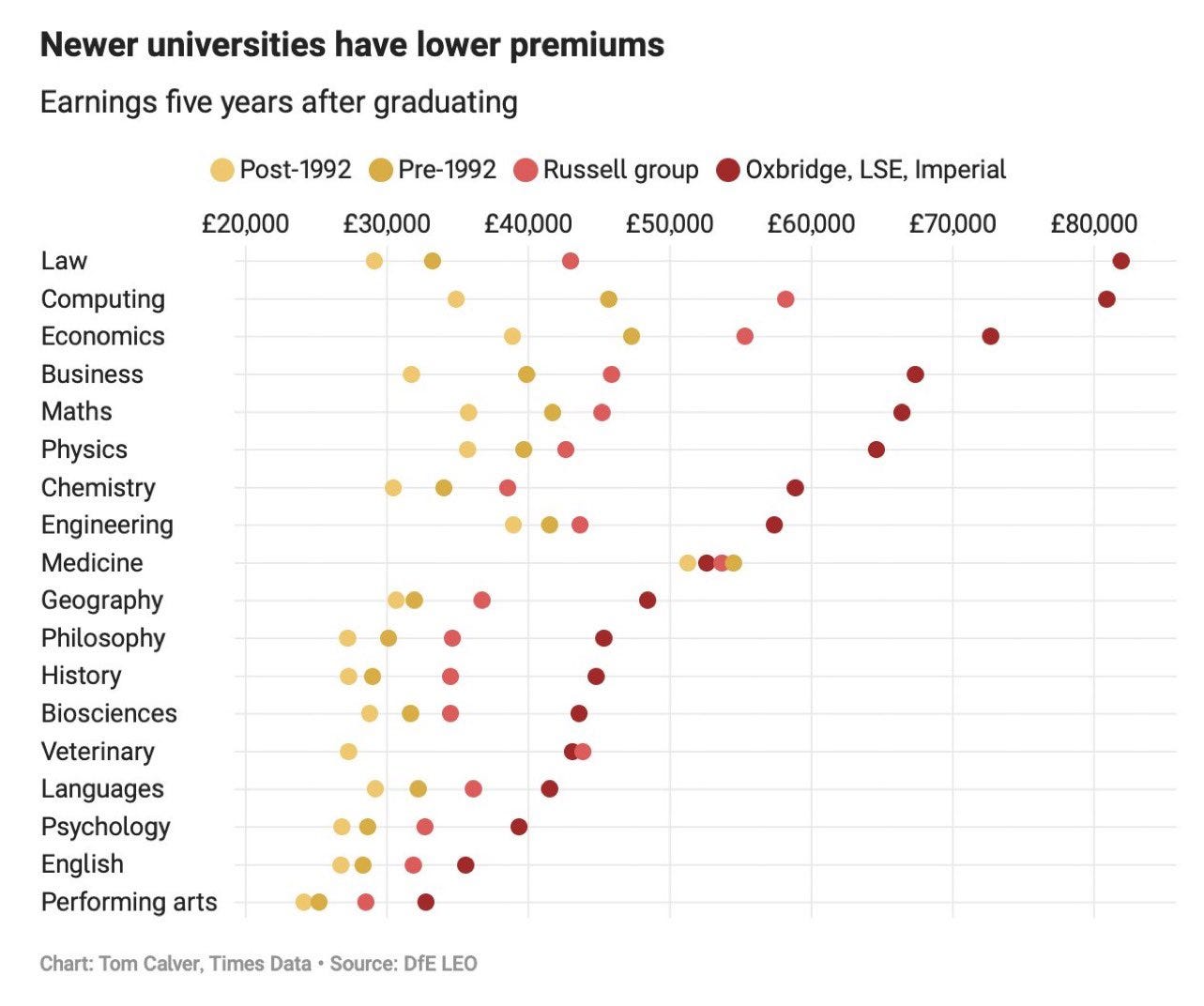
My reason for setting this out here is simple. People in the humanities and social sciences—who resent it when people with backgrounds in STEM or law say that humanities and social science qualifications are a bit of a doddle—need to appreciate that we have a point.
The problem was also made visible in class when two things occurred: (1) A ten minute conversation with a law academic versus a ten minute conversation with a humanities/social science academic inevitably disclosed that the law academic was smarter. (2) This then replicated in a particularly uncomfortable way when it became obvious in tutorials and seminars that 18-year-old law students were brighter than the adult humanities and social science academics purporting to teach them.
That doesn’t mean that all disciplines within the humanities and social sciences are empty. They’re not. Only the theory subjects were fatuous and without intellectual merit. Everything on this list, for example, is crap and anyone doing a PhD in it is wasting their time and money (and taxpayers’ time and money). I do think it’s possible to rescue some of these softer disciplines from the kudzu of nonsense that’s overgrown them—although it will be hard. Follow that “kudzu” link and you’ll see what I mean. Shakespeare is worthy of study, as is Latin, as is psychology. But those fields are not law, engineering, medicine, veterinary science—and it helps no-one to pretend they are.
Relatedly, when you see someone like Priyamvada Gopal throwing Jason Arday under the bus, know that it’s an attempt to save her own skin—and that of her risible “discipline.”
Nathan Cofnas is not racist
There are two distinct things going on in the background to the Arday appointment(s). The first is that he was appointed despite being a complete doofus and as dumb as a stump. The second is that while there probably are black candidates out there qualified to be a Cambridge professor, there won’t be many, and they are highly unlikely to be the descendants of slaves (from the Caribbean, the United States, or South America). They’re much more likely to be from a posh Nigerian background, and a particular Nigerian tribe (Igbo).
In the words of computer scientist Eric S. Raymond:
This is completely predictable to anyone who has spent 10 minutes reviewing the data on racial differences in mean IQ and knows what that implies for the right end of the bell curve.
The intersection set of people with predominantly sub-Saharan African ancestry with people sufficiently bright to deserve a university professorship is not empty, but it’s vanishingly small. The demand greatly exceeds the supply.
Which is why we’ve seen this movie many times before, and will again. They can’t help it. Corrupted academia would rather hire thousands of other incompetents than let go of its “anti-racism” to hire on merit alone.
The refusal to grapple with the black-white average IQ gap is astounding, and while the (mostly) white people responsible for appointing Arday look like absolute fools, the black intellectuals who refuse to accept an established fact look both truculent and dishonest. They don’t have to accept it’s genetic. They do have to accept that it’s real. As far as I’m aware, only one major black intellectual, Wilfred Reilly, accepts the existence of the gap (disclosure: I have been a guest on Wilfred’s podcast). If there are others, I would be delighted to know their names.
Two issues fall out of this. The first is that Nathan Cofnas is not racist for pointing it out. Facts are not racist. The second is that if people disagree with Cofnas’s secondary argument that the reason for the gap is primarily genetic, then yelling racist! at him does not prove him wrong. Evidence is what you need if you want to prove someone wrong, not moral abuse.

It’s the rule of law, Jim, but not as we know it
The idea that historically disadvantaged groups are entitled to extra civil rights—coupled with social preferment—over and above those held/enjoyed by people considered their oppressors is inimical to the rule of law, specifically the principle that people should not be punished for crimes they did not commit. We do not inherit criminality from our ancestors. This is in turn derived from the larger principle of treat like cases alike, which was first articulated in its modern form by the Roman jurist Ulpian.
Jason Arday got his job in large part because a lot of people—and especially humanities and social science academics—think it’s reasonable to punish whites (and sometimes East Asians) who have never wronged blacks by making it harder for them to get into university or gain employment. This punishment of whites/East Asians who have done no wrong is undertaken to compensate blacks who have not been wronged for wrongs committed by other white people against other black people in the past. This logic is the basis of all affirmative action schemes and preferential hiring regimes (provision for which exists—albeit in limited form—in the UK’s Equality Act 2010). It is also the logic of inherited vengeance.
It took humans centuries to work out that the law should punish individual wrongdoers rather than members of their family, their descendants, or their extended kin group for crimes or civil wrongs. One only need read some of the world’s great literature, both ancient and modern—from Njal’s Saga to The Godfather—to gain imaginative entry to a world where intergenerational and kin-based revenge are norms.
May I suggest that the world of medieval Iceland or a New York dominated by the Five Families are the sorts of places you probably only want to visit in fiction? We stopped basing punishments on vendetta—a long, slow process of legal evolution starting in early Republican Rome—for good reasons. Societies based on vendetta are places of violent horror and boiling intergenerational resentment.

Enter Carter-Ruck, or Journalism v. Law v. a bloke with a blog
It’s been widely—and accurately—reported that junior academic Nathan Cofnas broke the Jason Arday story on his personal blog. However, it shouldn’t have been his job to do. The same (or very similar) research had been done separately by both a retired academic (John Harris) and a journalist with Times Higher Education—an outlet dedicated to the tertiary education sector and owned, ultimately, by Rupert Murdoch. In response to both sets of revelations, either Cambridge or Arday or perhaps both in concert (this is unclear on the facts available to me) instructed Carter-Ruck, the most famous—and aggressive—specialist defamation law firm in the United Kingdom.
[UPDATE: Jason Arday instructed Carter-Ruck, not Cambridge University. See:]


Historically, Private Eye magazine (often a victim of their attention) referred to them as “Carter-Fuck” and, more recently, “Farter-Fuck.”
Despite the fact that the THE has libel insurance and Murdoch generally defends his publications, the magazine backed down. Jack Grove is the reporter who had his story spiked. I have it on good authority that several Cambridge academics—and perhaps people from other universities—then approached Cofnas with the material that they (and possibly the THE) had collated. Cofnas—being young & junior—is what lawyers call “a man of straw”. Suing him in defamation would benefit no-one, least of all Carter-Ruck. He published, scooping Jack Grove.
However, there is more to this story than a bit of media gazumping. Someone—it is unclear whether it was Arday or the university or even Arday’s college (Jesus)—reported both the retired academic who had made initial inquiries and Jack Grove, the journalist, to the police: two separate incidents. The claim was one of harassment in both cases, and the reports were made to two separate constabularies. The first (Avon & Somerset) declined to investigate, so John Harris—who lives in Plymouth—was safe. London’s Met, however, proceeded to put Jack Grove through a four month investigation.
Grove has written movingly about what happened to him for the Times Higher Education, in an unpaywalled piece I recommend you read:
But maybe my journalistic pursuit of this story was too “incessant”, as Arday has claimed, hounding him about details on his personal biography that had little bearing on his academic role, as he suggested.
In fact, prior to the letter that garnered a response from his solicitors, I submitted only three polite emails directly to Arday over the course of two months, asking about suspicions raised by multiple professors about plagiarism or odd data in his 2018 Social Sciences paper, then a further one about discrepancies in his CV and, finally, when and where his much-vaunted running achievements and charity activities took place.
Phrased very politely, these emails were factual: there was almost no evidence, I said, that he had completed any of these runs, particularly the 600 miles in six days slog. That feat, according to one YouTube talk, took place between Edinburgh and London in 2013 but there was no record of it, despite lesser runs gaining acres of publicity in local and national news.
I continued to receive no response from Arday, with all subsequent responses coming via the Cambridge press office.
I will do a brief excursus here mainly so readers get to contrast Grove’s excellent behaviour with the kind of “incessant” badgering that can invite police attention, including towards journalists. Among other things, it reveals that the THE is among the mildest of British media outlets—it’s very much not the Mirror or the Sun or God forbid the (late) News of the World.
Most people have forgotten the details of the Leveson Inquiry and Hacked Off, the organisation helmed by actor Hugh Grant and which, through its exposure of bad press behaviour, nearly landed the UK with a statutory press regulator—that is, a form of non-wartime print media licensing.2 This is something the country abandoned in the late 17th century. Its reintroduction would have represented an unbridgeable rupture with a significant chunk of the nation’s past and set the UK on a collision course with the United States and much of the British Commonwealth.
Hacked Off had two big complaints. The first concerned phone hacking—as the name suggests. The second concerned bailing people up outside their houses, or in other places where they may reasonably expect privacy, like hospitals and drug rehabilitation clinics. Inevitably, there were photographs. Another, subsidiary complaint was the press exploiting dysfunctional working-class families on council estates as Jerry Springer/Jeremy Kyle-like newsbait. Often, the only recourse for those families was no-win, no fee arrangements with law firms … like Carter-Ruck. This story is ably told by Glasgow lawyer and former MSP Adam Tomkins in his The Law of Speaking Freely, which I reviewed here.
The press still hangs around outside people’s houses and mobs politicians/celebrities—albeit to a lesser extent—and in my view the behaviour should be criminalised. Imagine what would happen if an ordinary member of the public camped outside Jeremy Corbyn’s or Dominic Cummings’s house all day and half the night (as happened, at different times, to both men). If journalists are allowed to get away with behaviour that would land you or me in gaol, then that’s a privilege, not a right. Privileges need to be justified and the bar is high.
During the controversy over my first novel, Australia’s press pack did not know where I lived. This is because—while I’d moved out of home some years before—I had not updated the electoral roll (a very Australian story, at least historically). Based on the (out-of-date) electoral roll, a large number of journalists and media crews camped outside my parents’ property. They refused to accept my father’s explanation that I did not live there any more, kept shoving material under the front door (including a stupendous monetary offer for an exclusive interview), and tried to photograph my parents.
We did not know how to get rid of them, until I was advised (by a lawyer, whom I will not name) to call the police and get them “moved on”. This strategy proved successful, and made me staggeringly unpopular. However, it boiled down to this: I did not want to talk to them, and was willing to take the risk that they would make something up because I’d said nothing. (In reality, even when I said something, they made things up, so I stopped speaking.)
As I pointed out with respect to affirmative action above, laws and norms where some people are entitled to extra rights—here, based on occupation rather than race or sex—over and above other members of the public are inimical to the rule of law. For a fuller and more rigorous development of this argument (especially as applied to journalists and doxxing) I recommend this excellent article by Australian legal academic and retired industrial relations barrister, Russell Blackford, published last month in the UNSW Law Journal.
The way to deal with Hacked Off and its (now) biggest gripe is to apply the law equally. Like cases alike. Apply the same reasoning to academic (and other) hiring/appointments and the Jason Arday problem—at least as to the future—will go away. Ulpian, call your office.
This piece—by a sitting judge who overlapped with me at my Australian alma mater many years ago—outlines the serious problems with enrolling students outside the top decile in law degrees. It is simply too difficult as a discipline for people with IQs below about 120.
I realise mentioning moany, Remain-y Hugh Grant is likely to invite irritation from some subscribers. Try to park that instinctive response for a bit and ask yourself whether he had/has a point.
This affair makes a mockery of the wide world of black scholars, writers, teachers etc who obtained their credentials legitimately - not stealing the work of others and not fabricating a life story. All on the faculty and administrators of Cambridge who facilitated this farce.
When I got my anthropology degree in the early-90s, the discipline was very conscious of the ‘softness’ of it’s scientific bona fides, and making fanciful and/or emotional claims was very much frowned upon. What a stellar tactic, making rigor racist, to undo 100 years of effort at culling Rousseauian twaddle.